From one question to a reshaped lesson
The engine works at question granularity, not chapter granularity. Every answer updates the student's knowledge model and determines the next question in real time. Not at the next quiz. Not at the end of the unit. After every single response.
Five operations between one answer and the next question
From the moment a student submits a response to the delivery of the next calibrated question, five operations run in under 200 milliseconds. Here is what each one does.
Student submits an answer
The student selects or types a response to a question. The response, timing, and attempt number are sent immediately to the engine. Nothing waits for a quiz boundary.
Response classifier tags knowledge state
The classifier assigns one of four states: correct, partially correct, incorrect, or skipped. It also checks whether the error pattern matches a known prerequisite gap in the content graph.
Sequencing engine selects the next node
The engine traverses the content graph from the student's current position. It selects the next node that best matches the classified state: forward if ready, lateral for enrichment, or back to a prerequisite if a gap was detected.
Difficulty modulator calibrates question hardness
Within the selected node, the difficulty modulator picks a question at the right challenge level for this student's current streak. A student on a three-correct run gets a harder variant. One recovering from a gap gets a confidence-building entry point.
Teacher dashboard updates in real time
Every step above writes to the student state model, which feeds directly into the teacher dashboard. The teacher sees each student's actual content position, current difficulty level, and any flagged prerequisite gaps, updated live without a page refresh.
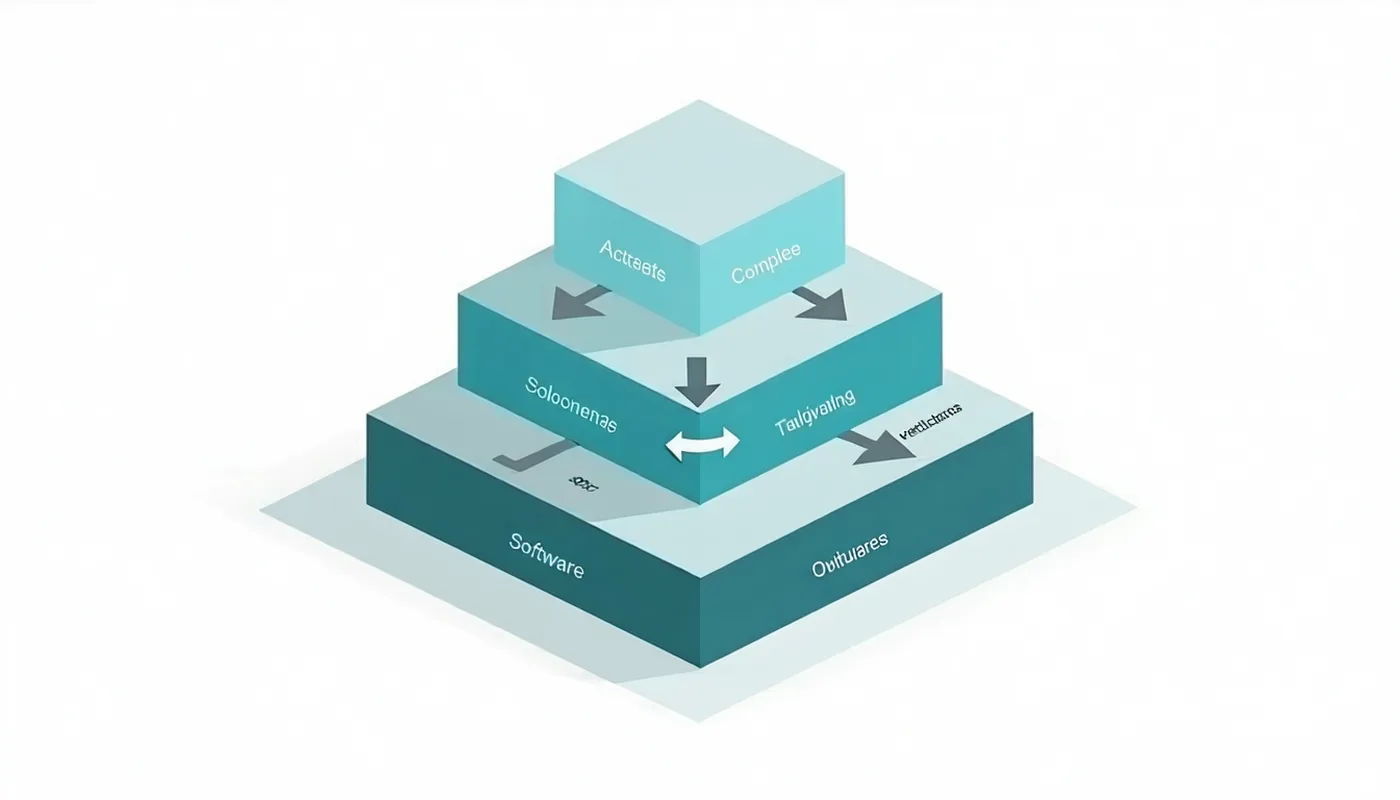
Three system layers, one routing decision per response
The Content Graph stores all learning nodes and their prerequisite edges. The Response Engine classifies each answer and traverses the graph. The Student State Model persists each learner's current position and flagged gaps. The three layers are read and written on every response submission.
Four response states, four distinct routing decisions
Wrong answers are not failure states. Each response type carries information about where the student actually is, and the engine routes accordingly.
Correct
Engine advances to the next node on the primary learning path. If the student has answered three consecutive correct responses at a level, difficulty steps up.
Partially Correct
Engine branches to a lateral node that reinforces the partial concept before continuing forward. The student does not stall but does not advance without consolidation.
Incorrect
Engine checks whether the error matches a prerequisite gap pattern. If it does, the student is routed to the prerequisite skill first before returning to the current node.
Skipped
The skip is flagged in the student state model and visible to the teacher. The engine continues forward so the session does not stall, then revisits the flagged node later via spaced scheduling.
Talk to the team or start a trial
Questions about how the content graph format works, what the response classifier handles, or how to map your existing question bank into prerequisite edges? Reach out directly. Kai handles technical questions.